
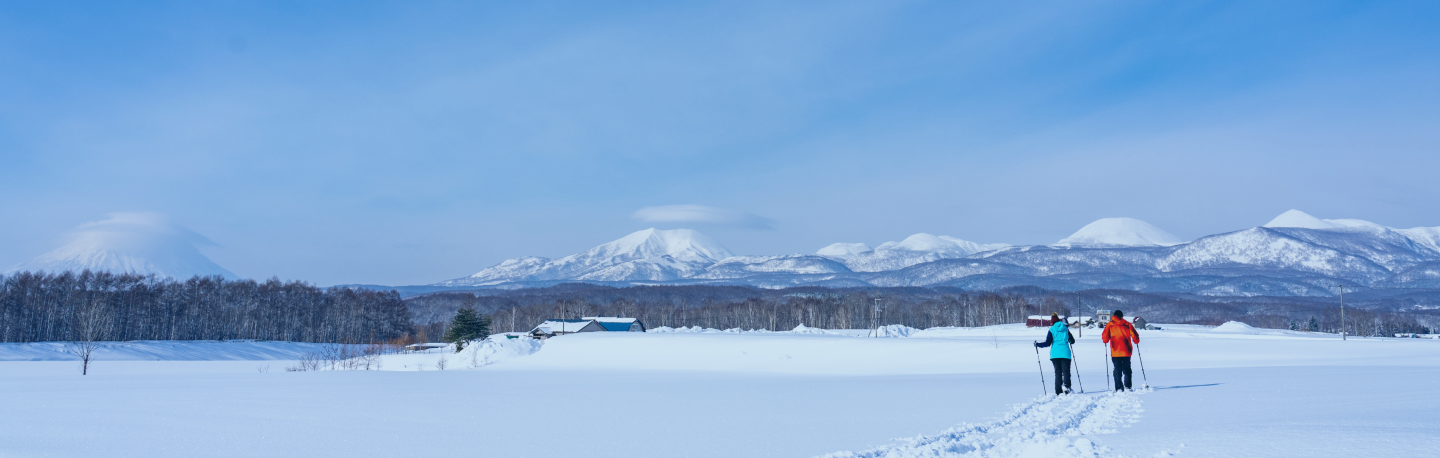
Craft Traditions Still Alive — Hokuriku’s Culture of Making


Hokuriku is a region where the history of craftsmanship runs deep.
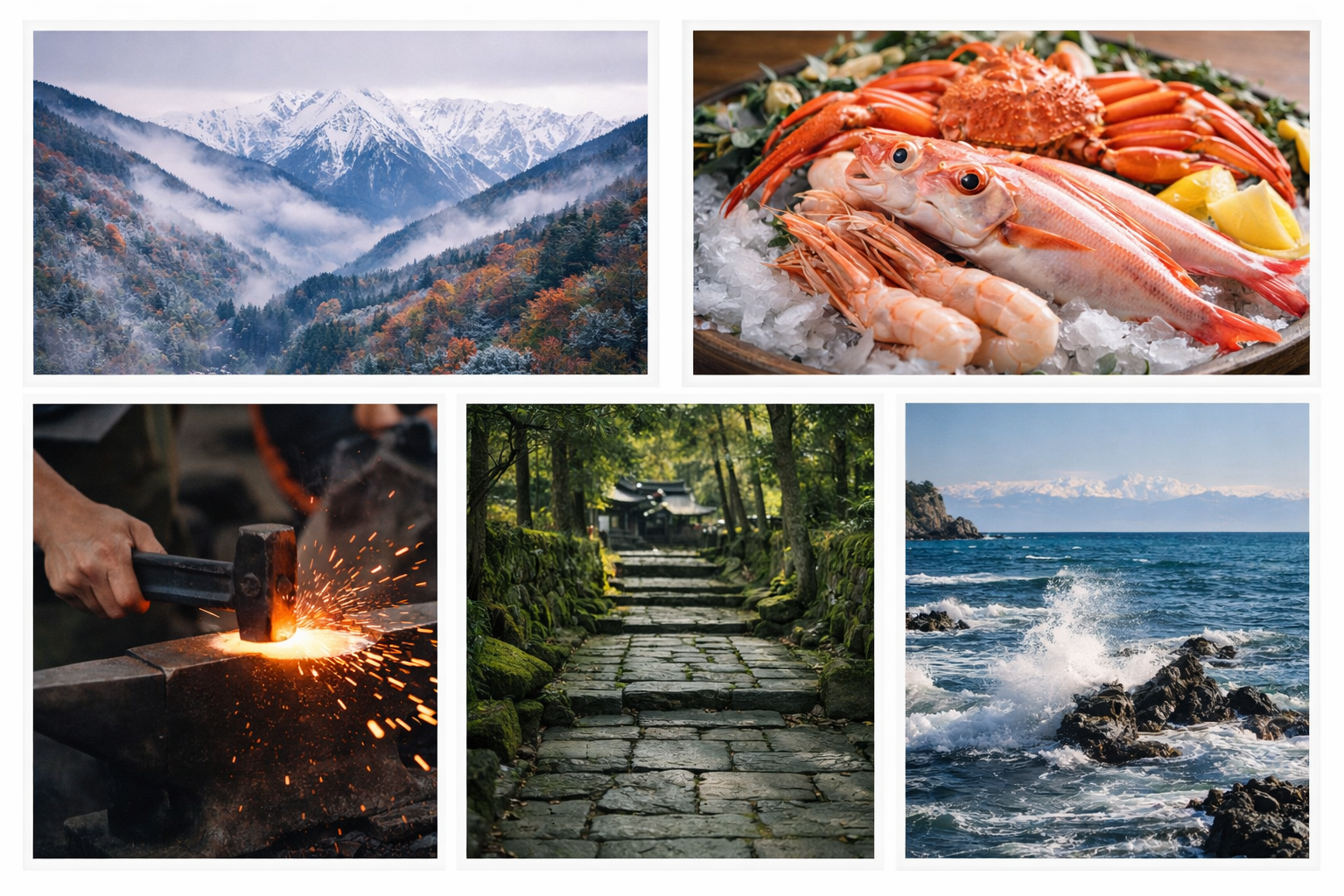
Surrounded by sea and mountains, this part of Japan has long nurtured industries and crafts shaped by the natural world. These traditions are not simply preserved as relics of the past. They continue to evolve, adapting to changing times while remaining closely connected to modern life.
In Toyama, craftsmanship is defined by the meeting of beauty and utility, especially in casting and metalworking. Advanced metalworking techniques have been carried forward into contemporary craft, where tradition provides the foundation for elegant, highly functional design.
In Ishikawa, the legacy of the Kaga domain fostered crafts marked by both refinement and decorative richness. Kutani ware, Yamanaka lacquerware, and gold leaf all reflect a culture in which color, detail, and aesthetic grace are deeply valued. The pursuit of beauty lives not only in art, but in everyday vessels and tools.
In Fukui, traditions such as Echizen washi paper and Echizen blades reveal a culture that values the material itself. Rather than showiness, these crafts emphasize function, durability, and the kind of quality that deepens with use. Their character is sincere, understated, and built to endure.
What these three prefectures share is that craftsmanship still lives within daily life. The skills passed down through generations are not simply archived—they continue to be refined in the present. By visiting workshops, watching artisans at work, and sometimes trying the techniques for yourself, the philosophy and aesthetic values of each place come into sharper focus.
In the following pages, we explore some of the traditional crafts that define each region, along with the experiences that bring them to life.
Toyama — Nousaku
When Metal Takes Shape in Your Hands
Based in Takaoka, Toyama, Nousaku draws on more than 400 years of local casting tradition to bring metal craftsmanship into contemporary life. At its headquarters and factory, visitors can enjoy not just a tour, but a layered and immersive experience.
On the guided factory tour, you can observe the casting process up close: molten metal poured into molds, then cooled, hardened, polished, and transformed into finished objects. Watching metal shift from liquid to vessel right before your eyes is a powerful reminder that making is a process of both precision and change. The movements of the craftspeople are efficient and exact, and the factory is filled with a quiet sense of focus. It is a chance to feel the atmosphere of a living production site where craftsmanship remains very much alive.
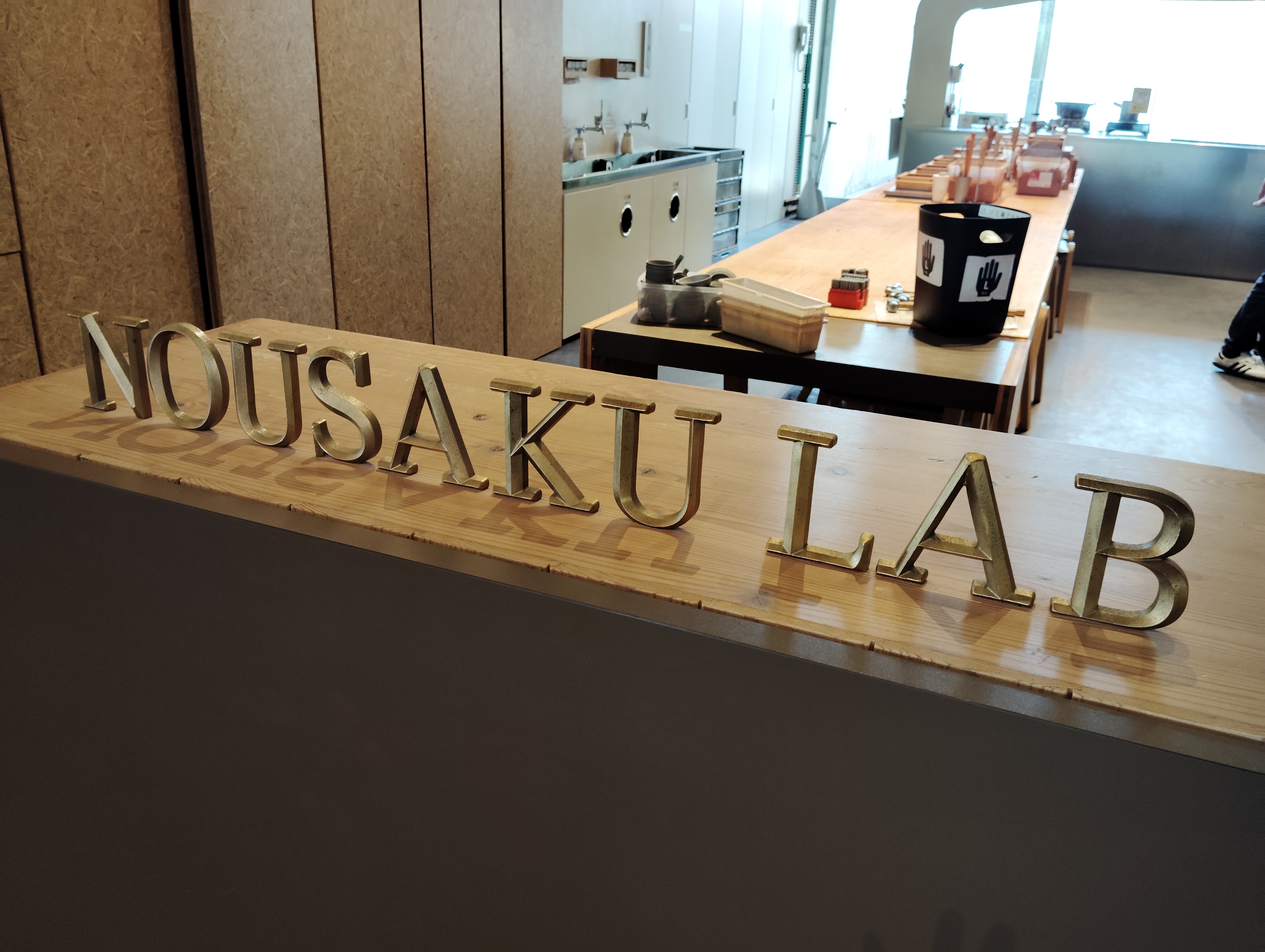
Especially memorable is NOUSAKU LAB, the foundry workshop experience.
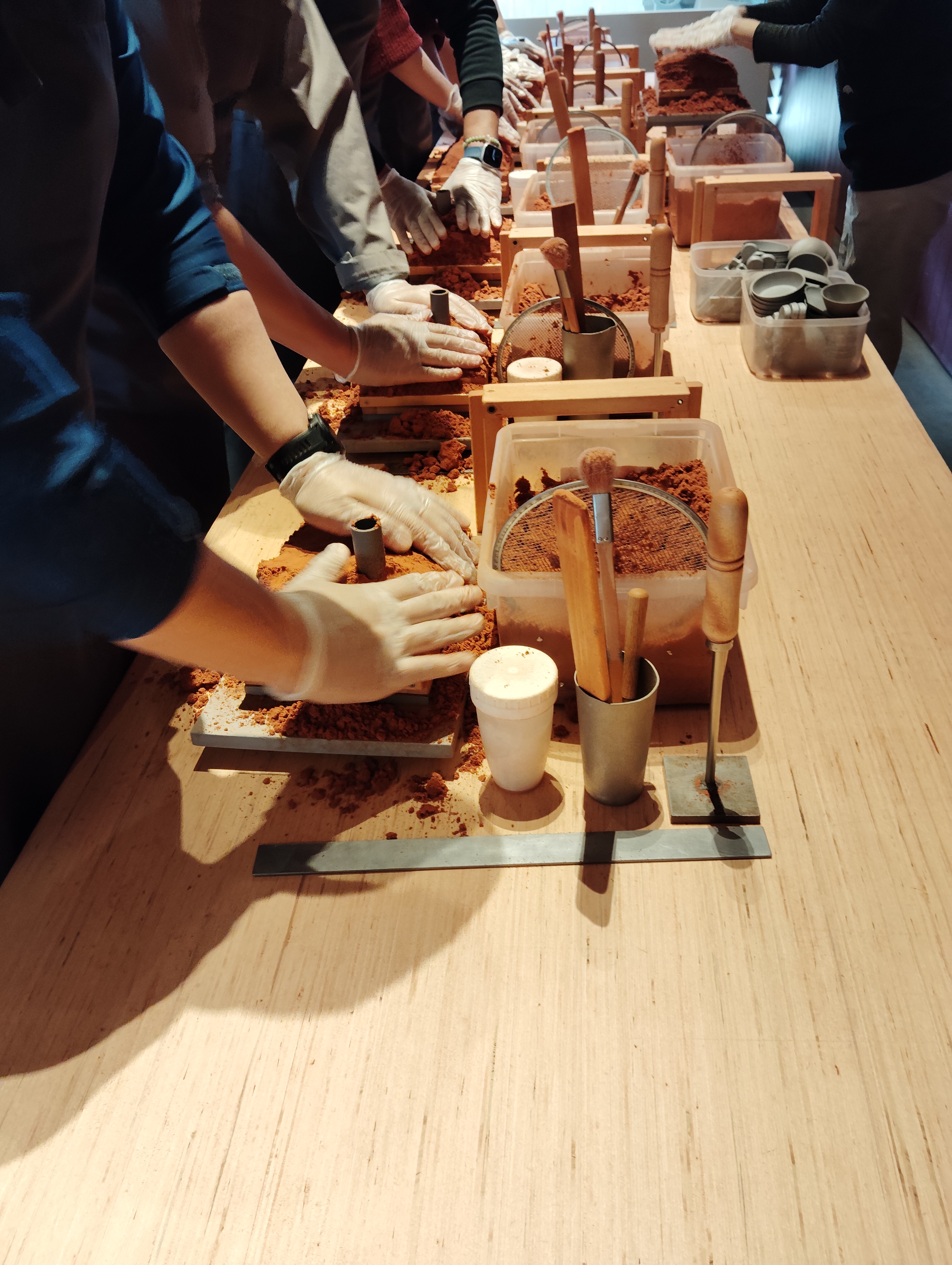
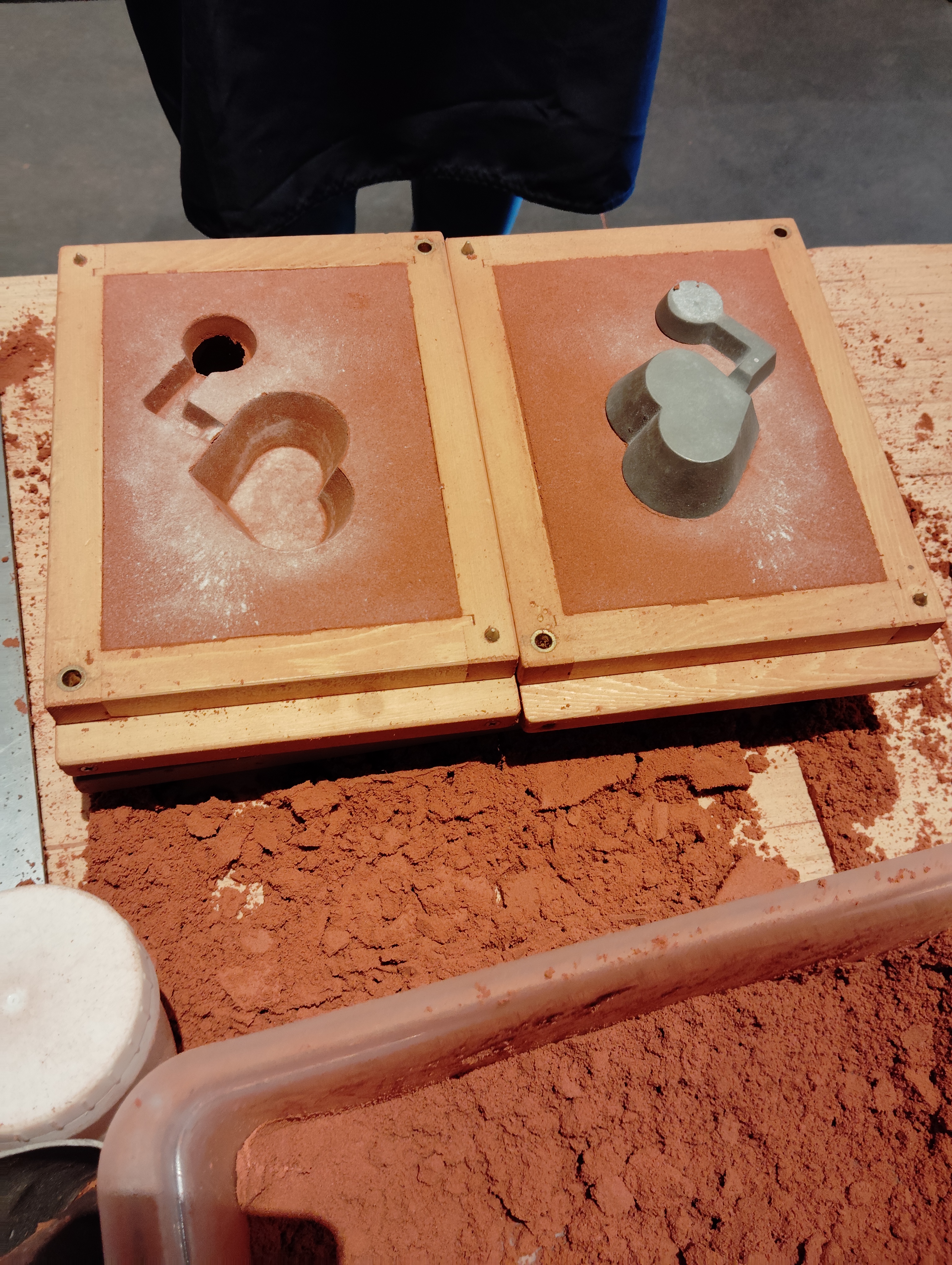
It begins with making a sand mold. Special casting sand is packed into a wooden frame and carefully pressed into shape, after which patterns or letters can be added to the surface. Molten tin is then poured in and left to cool. Once the metal has hardened, the mold is removed, the surface polished, and the piece finished by hand. Visitors can create items such as chopstick rests, sake cups, or small plates, with sessions ranging from about 30 to 90 minutes depending on the program.
Completed pieces can be taken home the same day. In particular, objects made from 100% tin have a softness that allows them to be gently reshaped by hand. This idea—that the user completes the final stage—captures something distinctive about Nousaku’s philosophy. The object is finished, yet it continues to change with the person who uses it.
After the workshop, visitors can stop by IMONO KITCHEN, the on-site restaurant and café. Dishes and desserts served in Nousaku’s own tableware create a setting where the texture of the vessel becomes part of the dining experience. The cool sheen of metal and the warmth of the food form a contrast that completes the character of the place.
The factory shop next door offers popular series alongside items available only at the headquarters. Choosing a piece after making one yourself brings a different kind of satisfaction—something beyond ordinary shopping.
A visit to Nousaku is not simply about buying a finished object.
It is about witnessing the moment when material transforms, and shaping something with your own hands. Through that process, the time and skill contained in a single vessel become quietly visible. Here in Toyama, casting culture becomes something you can truly touch.
Toyama — Saburomaru Distillery
Hokuriku Whisky, Matured by Climate and Craft
Set in Tonami, Toyama, Saburomaru Distillery is a historic whisky distillery shaped by the climate and culture of Hokuriku. Since beginning whisky production in 1952, it has created spirits with a character rooted in this snowy region and its exceptionally pure water.
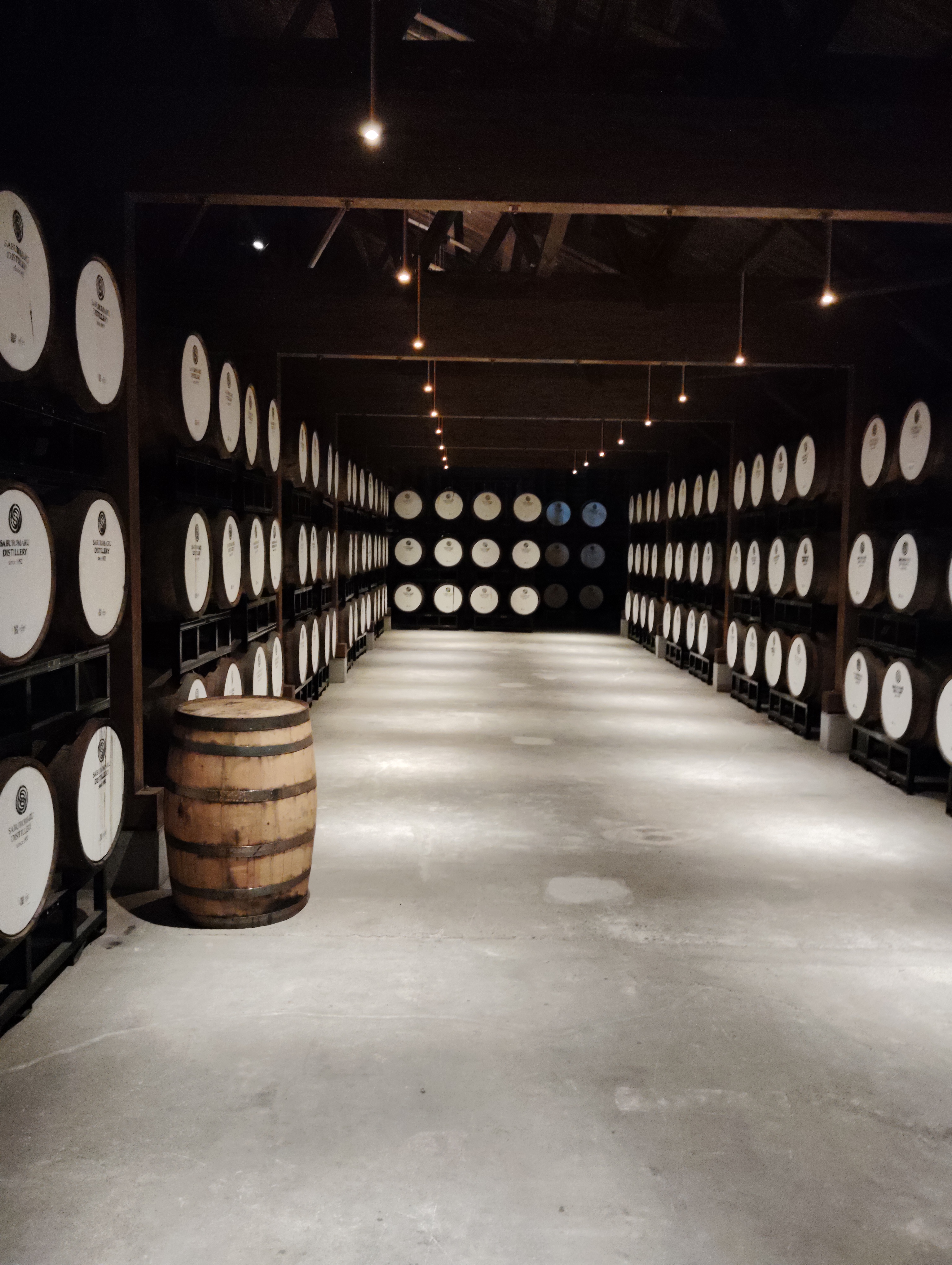
At the heart of the distillery is ZEMON, the world’s first cast-metal pot still. Made using Takaoka’s traditional casting technology, this still influences heat transfer and vapor circulation in distinctive ways, helping produce a whisky with both depth and strength. The fact that regional metalworking lies at the core of the whisky itself is one of Saburomaru’s most compelling qualities.
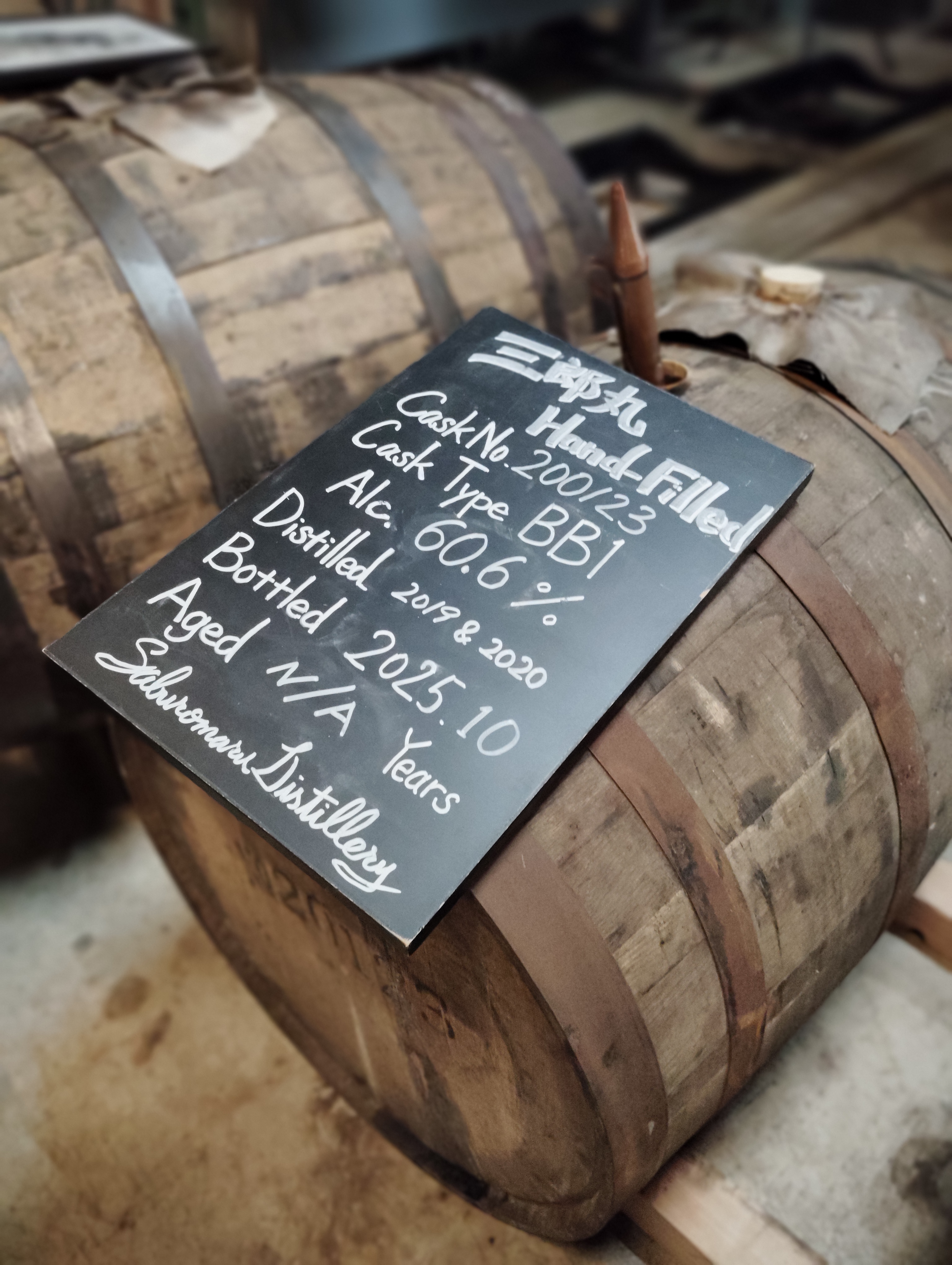
The distillery tour leads visitors through each stage of production, from mashing and fermentation to distillation and maturation. The nutty scent of malt, the sweet air rising from fermentation tanks, and the dense heat of the still room all change the feel of the space from one process to the next. It is an experience that allows you to sense whisky being born not only through explanation, but through the air itself.
Step into the warehouse, and rows of casks stand quietly in the cool. A faint woody aroma fills the space. Alongside Spanish oak and sherry casks, the distillery also uses mizunara, Japan’s native oak, known for lending delicate notes reminiscent of sandalwood and aloeswood. The flavors shaped over years of conversation between spirit and barrel create a character unique to this place.
One of the most popular premium experiences is the hand-fill program, where visitors draw whisky directly from a maturing cask and bottle it themselves. Surrounded by the rich aroma rising from the barrel, you create a bottle that is unmistakably your own—a memory that lingers long after the visit.
At the end of the tour, there is also a tasting session. Smoky yet structured, gently sweet on the finish, and touched with the subtle fragrance of mizunara, the whisky becomes something more than a sample once you understand the story behind it.
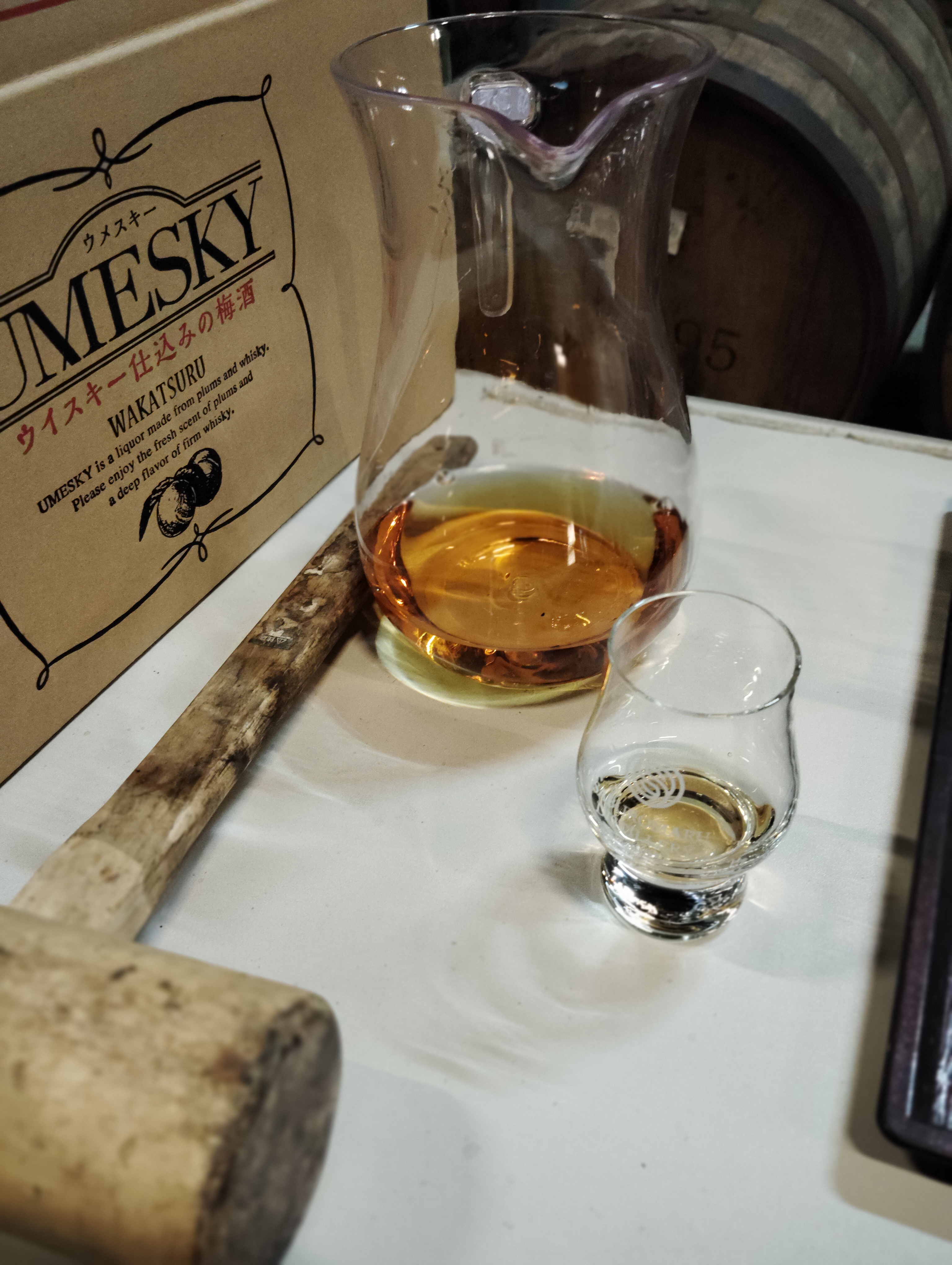
Saburomaru is not concerned only with preserving tradition. It is also exploring sustainable ways of making, from developing equipment that draws on regional casting expertise to finding new uses for by-products. Materials and skills rooted in the land are continually being carried forward into new value.
Whisky is a drink that asks you to taste time.
At Saburomaru Distillery, you also taste the climate, technology, and philosophy behind it. In a single glass, the depth of Hokuriku’s culture unfolds quietly.
Ishikawa — Imai Gold Leaf
The Light of Gold, Carried Through Kanazawa
The roots of Kanazawa’s gold leaf culture lie in both history and environment.
During the Edo period, the Kaga domain sought to express its prestige not only through military power but through culture. Maki-e artists, gold leaf makers, lacquer artisans, and other craftspeople were brought under its protection, allowing techniques to be developed and passed on. A local aesthetic emerged—one that prized elegance and dignity even within brilliance.
Kanazawa’s gold leaf tradition also survived because the city escaped large-scale wartime destruction, and because the humidity of the Sea of Japan coast was especially well suited to the production of ultra-thin gold leaf. With both policy and climate working in its favor, Kanazawa matured into a city defined by the handling of gold.
Imai Gold Leaf stands within that tradition.
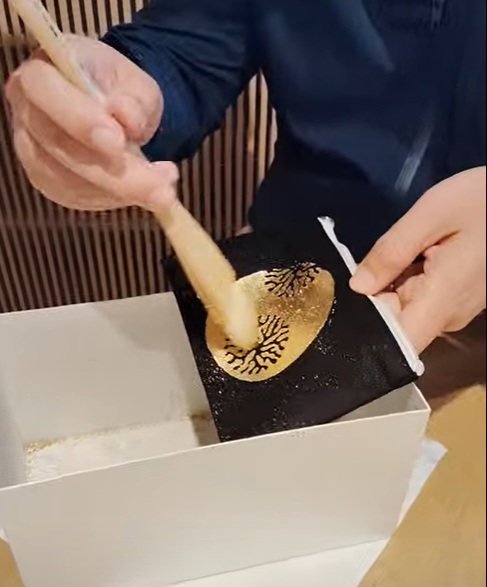
Gold leaf is often imagined as something extravagant, but encountering it in person changes that impression. It is said to be only around one ten-thousandth of a millimeter thick—so delicate that even a faint breath can move it. It is a material that demands not force, but careful gestures and sensitivity.
In the workshop experience, adhesive is applied to the chosen surface, and the gold leaf is gently placed using special tools. Rather than simply “sticking” it on, the process feels more like dressing an object in light. Once the extra leaf is brushed away and the finishing touches are complete, a quiet radiance begins to appear.
Workshops using soft gold leaf allow participants to apply it even to curved or three-dimensional surfaces, making it possible to decorate bowls, accessories, and other small objects with greater freedom. While preserving traditional technique, the craft continues to evolve into forms suited to contemporary life.
An experience at Imai Gold Leaf feels surprisingly approachable. Guided gently by skilled staff, even first-time visitors soon find their hands moving naturally. A tiny fragment of gold responds to the smallest movement of the fingers, shifting the way it catches the light. As you begin to notice these subtle changes, the act of working with the material itself becomes deeply satisfying.
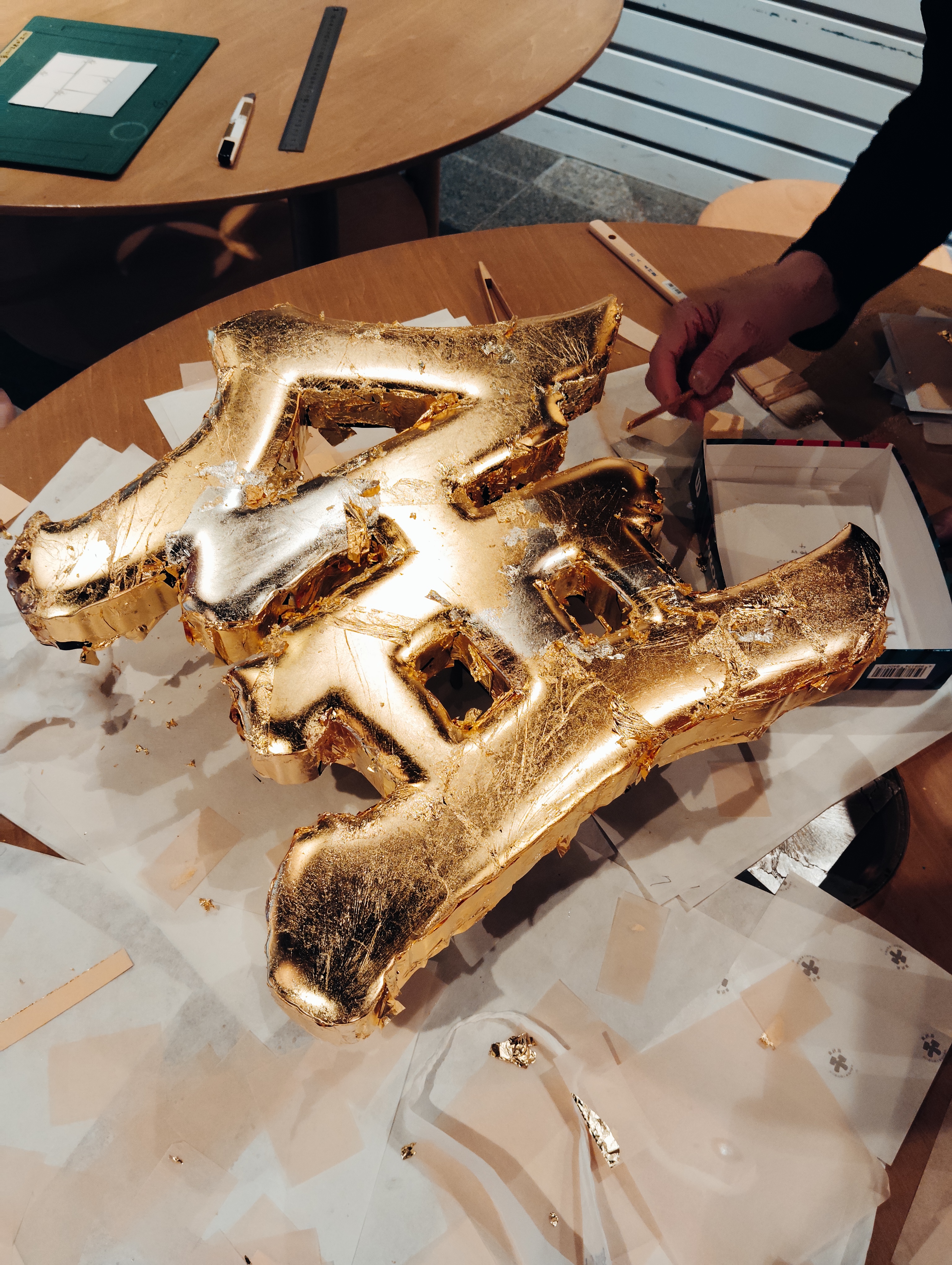
When you hold the finished piece, what remains is not only the glow of gold, but the clear feeling that you shaped it yourself. The light created during your journey may go on illuminating your everyday life in small ways, quietly bringing back the atmosphere of Kanazawa.
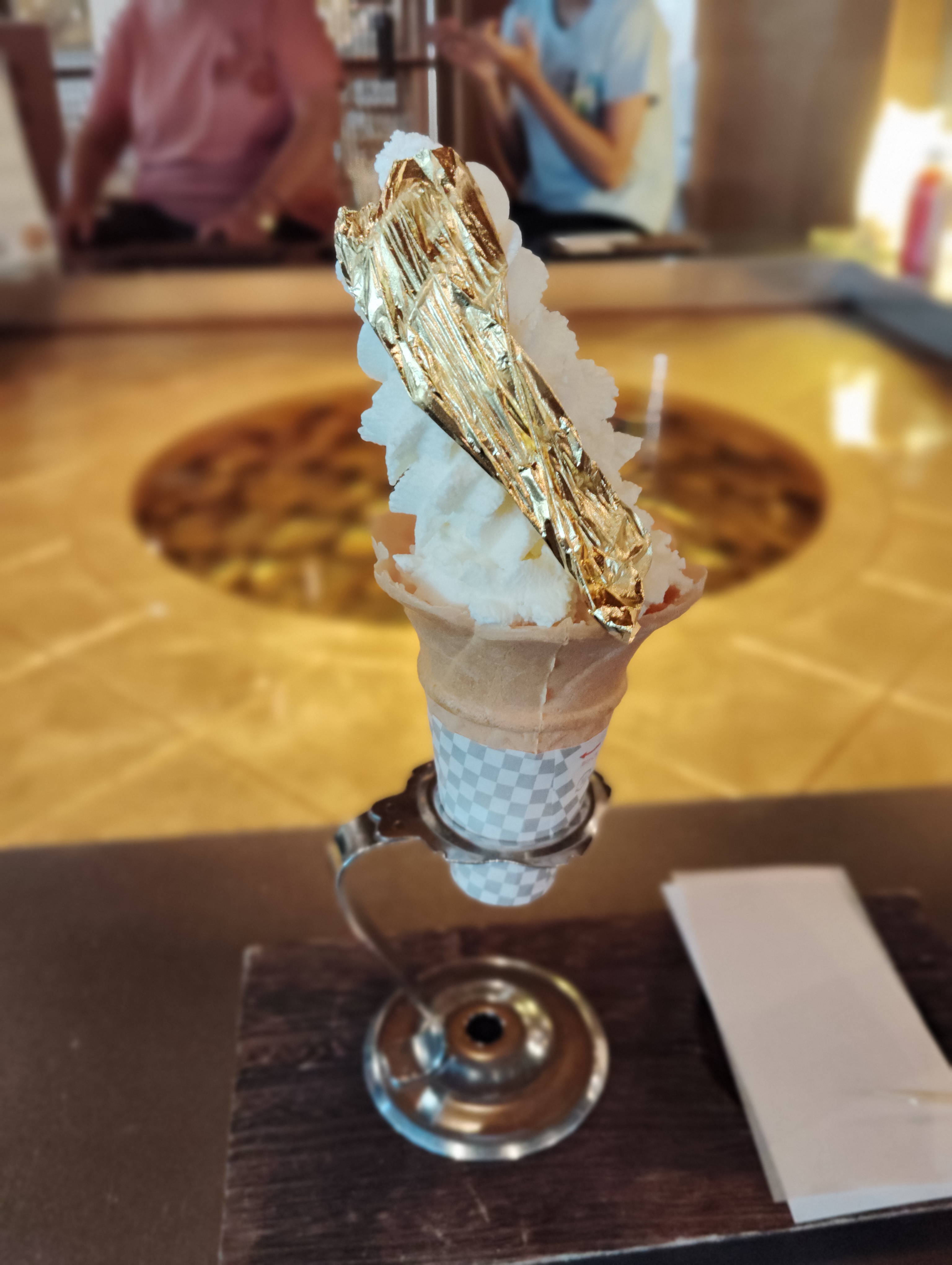
The gold culture cultivated in Kanazawa over centuries has never been merely excessive.
Its understated yet profound glow quietly speaks of the city’s distinctive sense of beauty.
Ishikawa — Kutani Ware
When Color and Clay Take Form
Kutani ware began in the village of Kutani in Kaga.
First developed in the seventeenth century, it later disappeared before being revived in 1826 and carried forward into the present. Bold yet intricate painting and richly layered color define its unmistakable character.
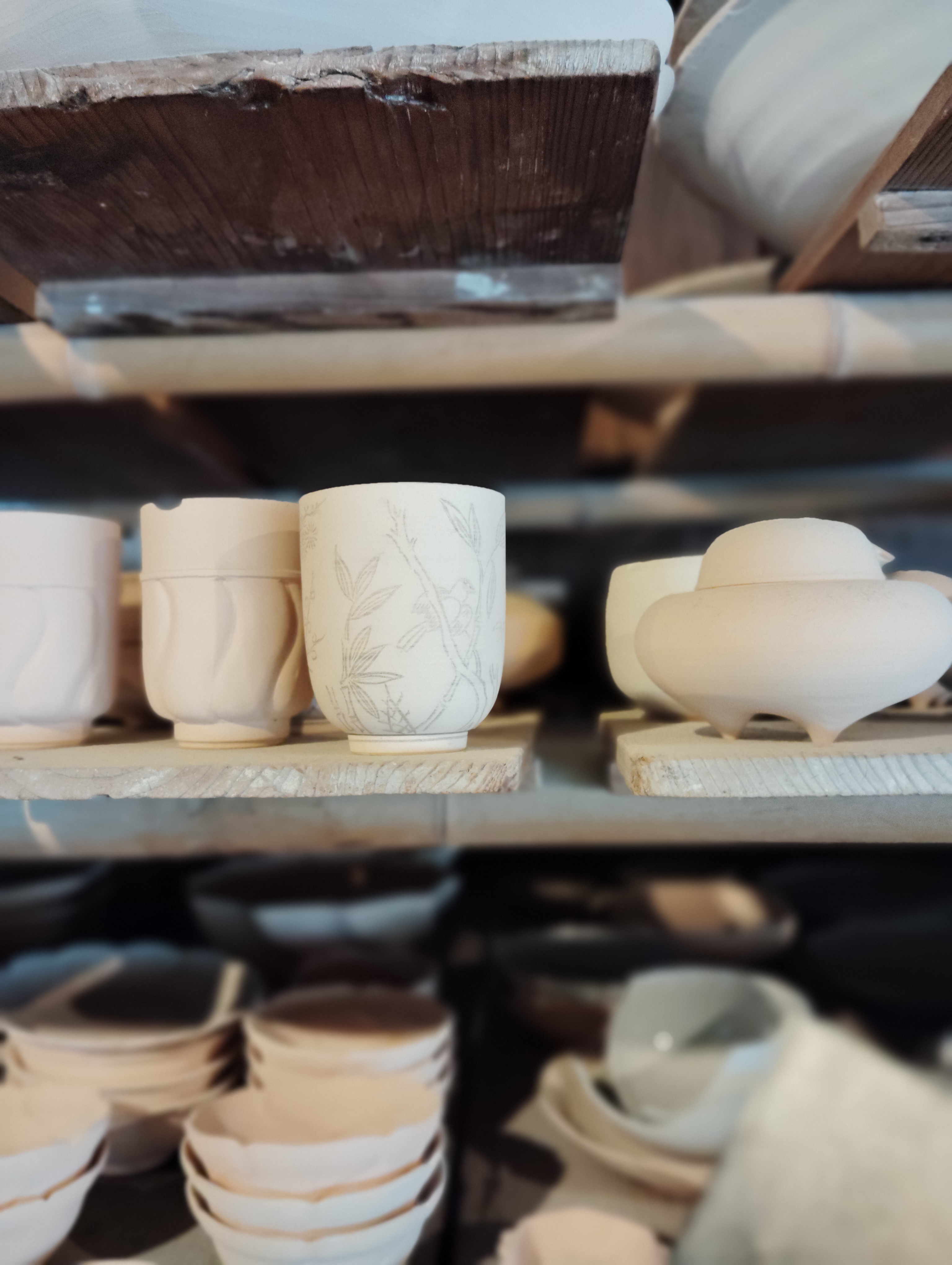
At the Kutaniyaki Kiln Site Museum in the Yamashiro Onsen area, visitors can encounter both the history of Kutani ware and the origins of its making. Exhibits on the grounds reveal the structure of the old climbing kilns and the process of firing, offering a sense of the intensity of an era when clay and flame met directly. Seeing the kiln’s interior up close makes it clear that Kutani ware is a craft completed in the transformative heat of fire.
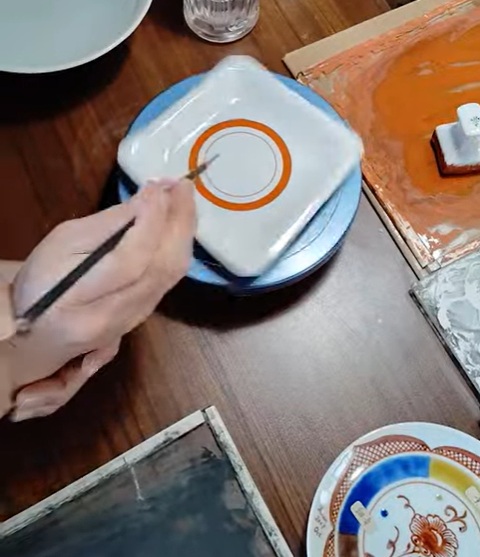
The hands-on experience is a substantial one: visitors choose either wheel-throwing or painting, with each session lasting about 90 minutes. This is not a quick activity, but a chance to fully engage with the process.
If you choose the potter’s wheel, you shape clay on the spinning surface with your own hands. The weight of the clay and the feel of water are transmitted directly through your fingertips. Even a small difference in pressure changes the form; if the center slips, the vessel shifts with it. In that quiet concentration, watching a shape slowly emerge becomes more absorbing than expected.
If you choose painting, you decorate white porcelain using the iconic Kutani Gosai, or “five Kutani colors”: red, yellow, green, purple, and deep blue. Their vividness and the depth created through layering are hallmarks of Kutani ware. Firing deepens the colors and gives them their final luster. Painting while imagining the finished piece becomes a kind of conversation with color itself.
The completed work is fired and delivered about two to three months later. After time in the kiln—where clay and pigment are transformed by flame—a vessel arrives carrying not only form and color, but the memory of the journey itself.
A Kutani ware workshop is ninety minutes of deeply focused making—whether with clay or with color.
To shape a form, or to give it life through color: that choice is itself part of the appeal of Kutani.
https://visitkaga.jp/kutani-kamaato/index.html
Fukui — Takefu Knife Village
Where the Sound of Forging Steel Still Echoes
Located in Echizen City, Fukui Prefecture, Takefu Knife Village is a cooperative workshop established in 1991 by young bladesmiths determined to carry their skills into the future through collaboration. The tradition of Echizen forged blades, with a history of more than 700 years, began with agricultural tools before developing into kitchen knives and edged instruments. This village was created not to isolate those techniques, but to share and refine them together.
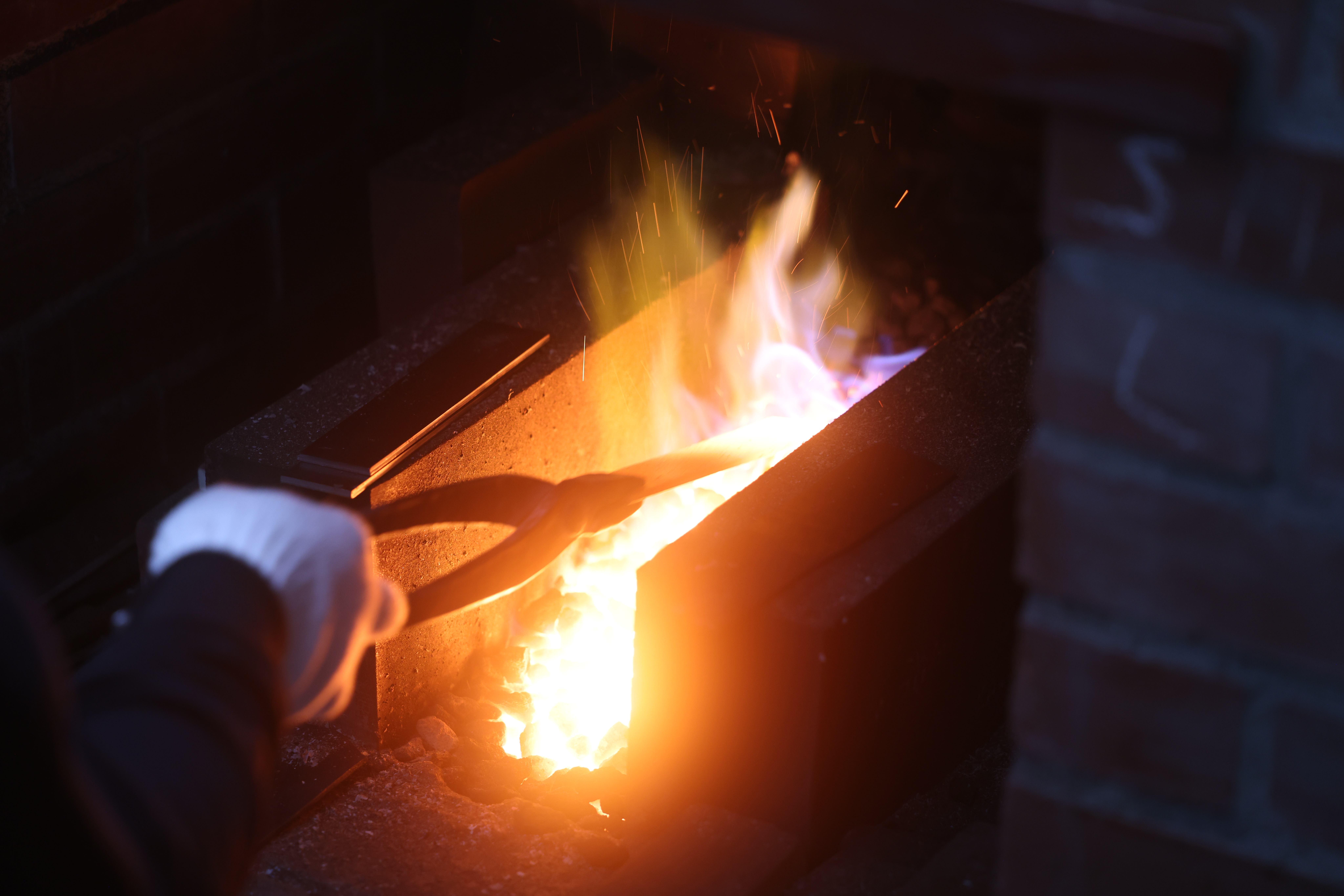
Inside, visitors can observe each step of the process up close, from forging and heat treatment to sharpening and finishing. In the forging area, red-hot steel is hammered again and again, and the sound of metal under the hammer rings through the space. Sparks fly as the steel gains strength through changes deep within its structure. During heat treatment, the control of temperature in a single instant determines the character of the blade. Then, in the sharpening stage, concentration gathers around the moment the cutting edge begins to catch the light.
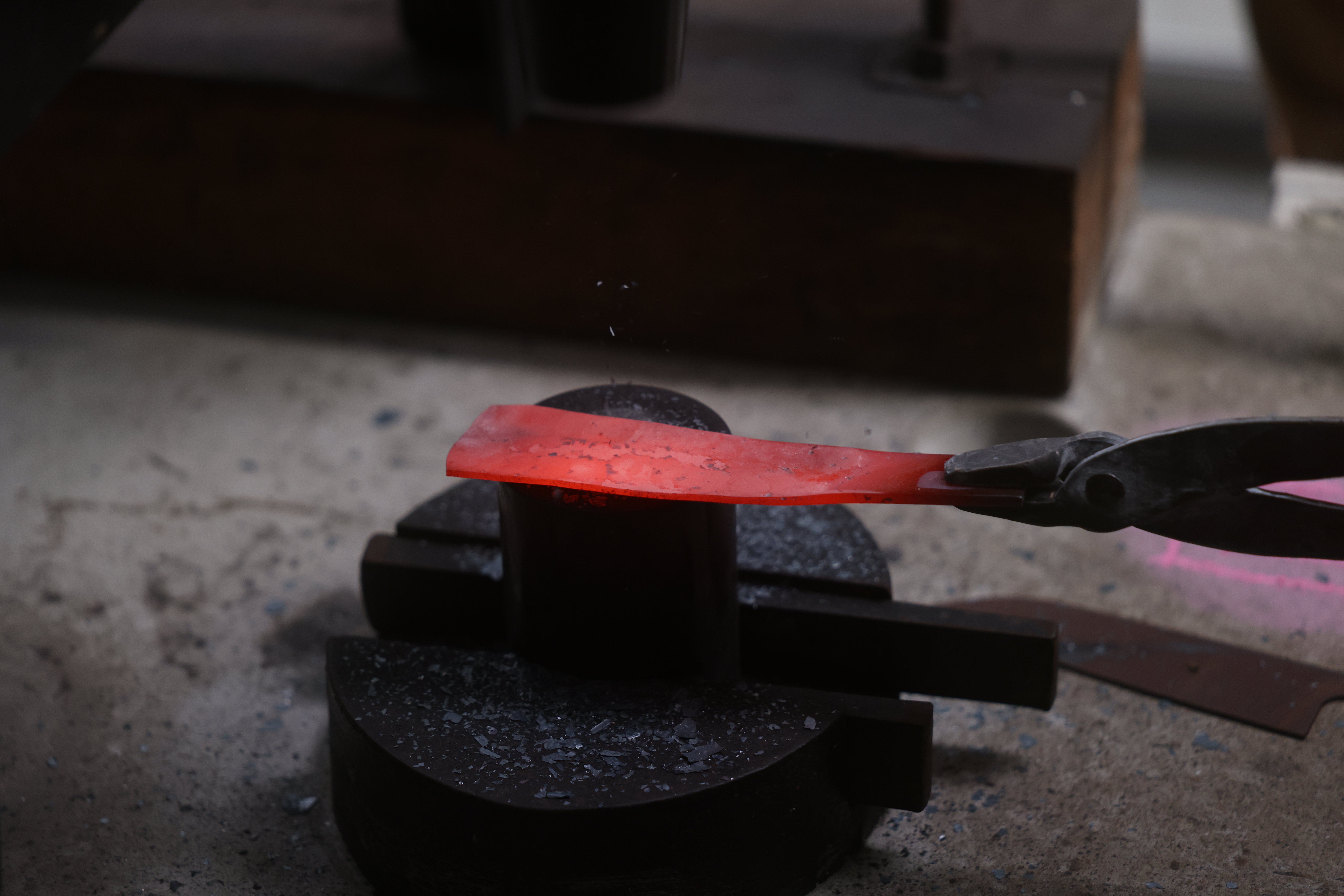
The appeal of Echizen blades lies not only in sharpness, but in the balance between hardness and resilience. These are tools designed to be used for years, and they are highly regarded by chefs around the world. Behind each blade is the idea that a tool is not something to be consumed and discarded, but something that grows with the person who uses it.
Hands-on experiences allow visitors to take part in certain stages, such as working with steel or trying aspects of the sharpening process. By holding the tools yourself and feeling the hardness and rebound of the material, you begin to understand blade-making through the body. Small differences in angle or pressure produce visible results—something impossible to grasp by watching alone.
To stand in this space is to feel the breath of the craftspeople facing steel, and the weight of techniques passed down over centuries. It feels less like visiting a tourist attraction than stepping into a working world of craftsmanship that is still very much alive.
In the attached shop, knives from the different workshops are displayed side by side. After seeing the process, the knife you hold no longer feels like a product alone, but a tool chosen with an understanding of the labor and time behind it. Feeling its balance, weight, and the brilliance of its edge becomes part of the experience.
Time spent with Echizen steel is also a chance to return to the essential nature of the tools that support daily life. That feeling remains with you long after the journey ends.
Fukui — Shamisen in Mikuni Minato
Echoes of a Port Town, Carried in Sound
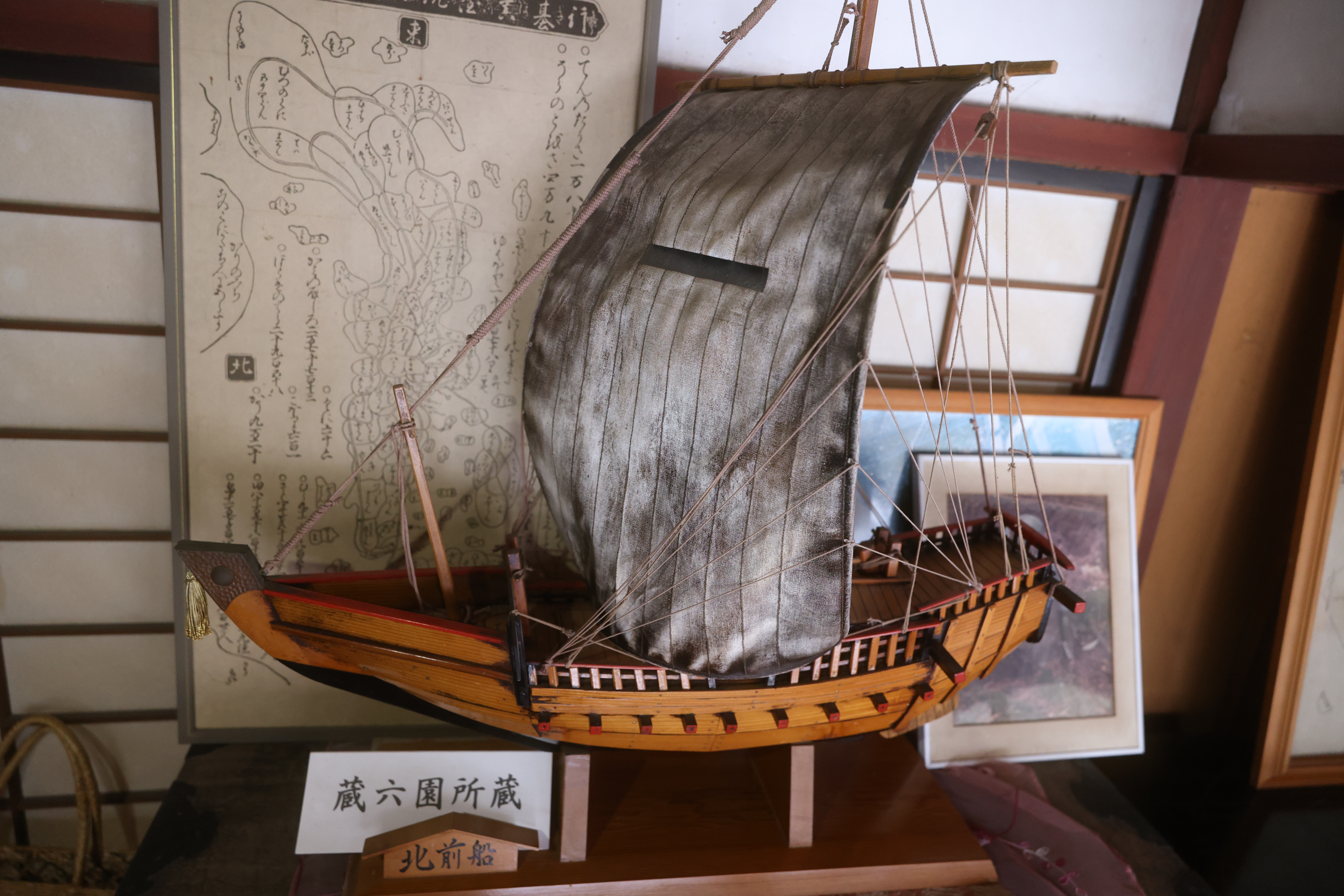
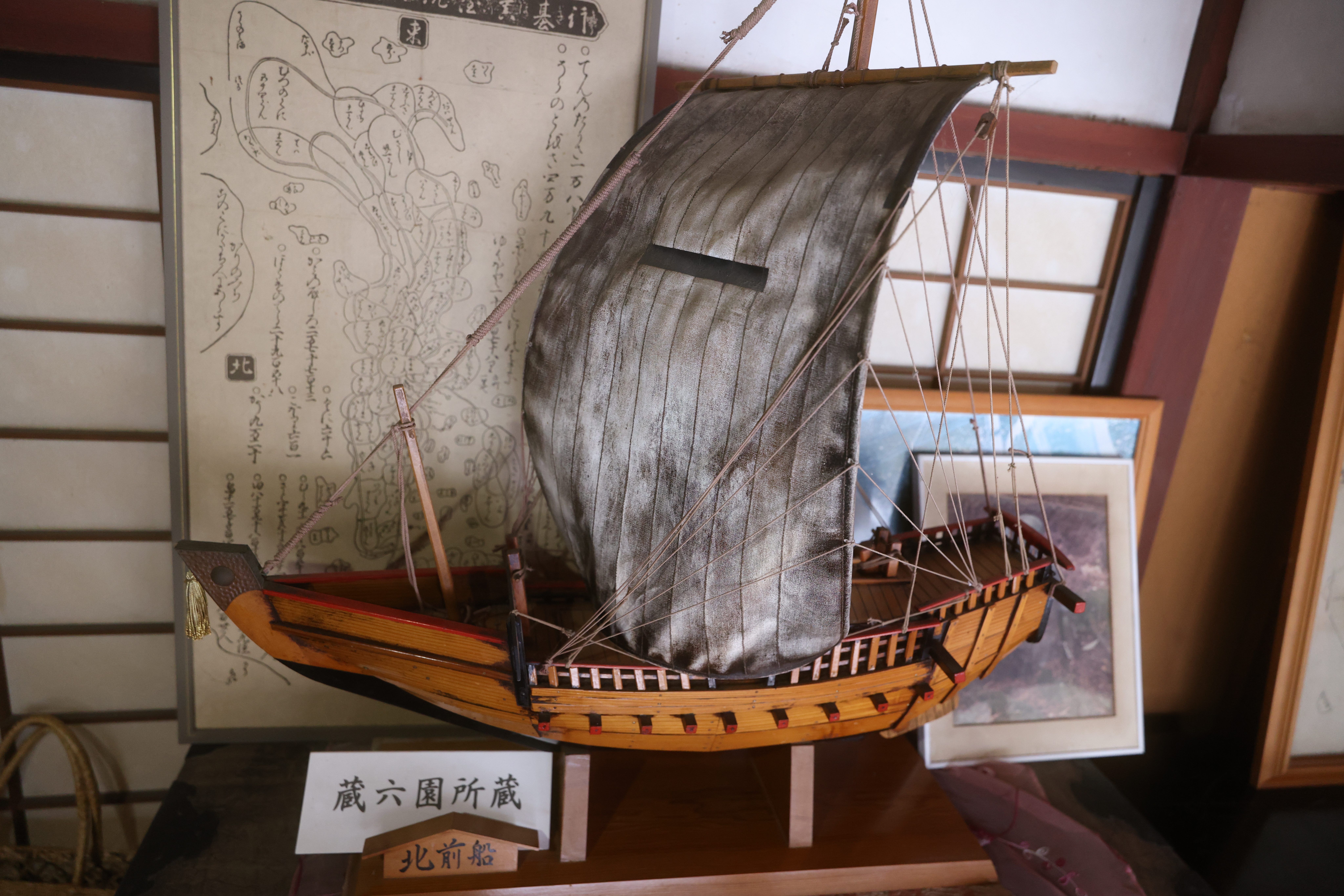

Facing the Sea of Japan, Mikuni Minato once flourished as a major port of call for the Kitamaebune trading ships.
From the Edo period into Meiji, these merchant vessels linked Hokkaido and Osaka along the Sea of Japan coast, carrying kombu, herring, rice, sake, and many other goods. They were not simply transport ships, but trading vessels that generated profit by doing business at ports along the way.
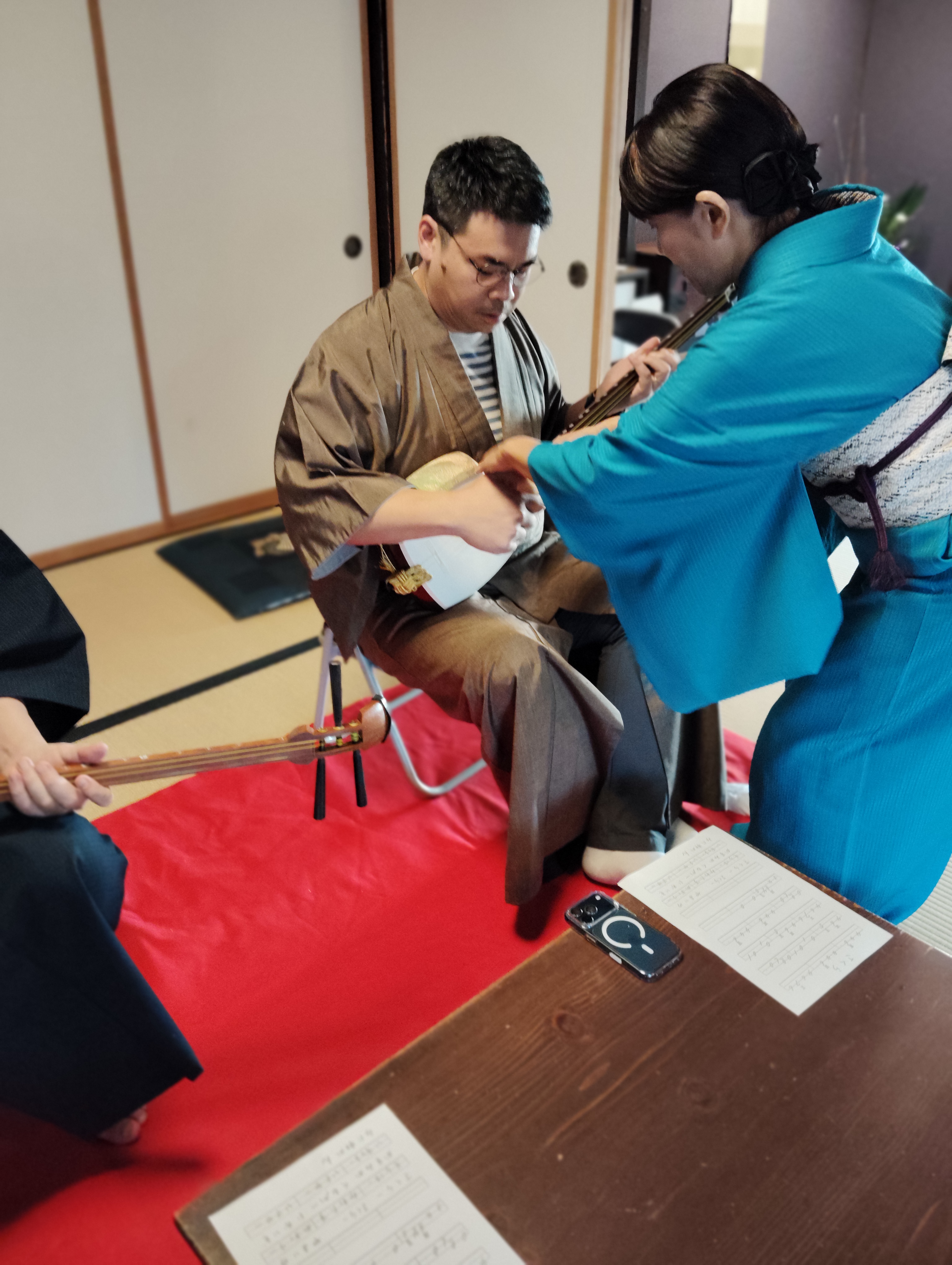
As a hub of that maritime network, Mikuni Minato developed not only merchant culture but also performing arts. Songs and shamisen music were essential to entertaining sailors and merchants arriving from distant places. Their sounds once colored the evenings of this busy port town.
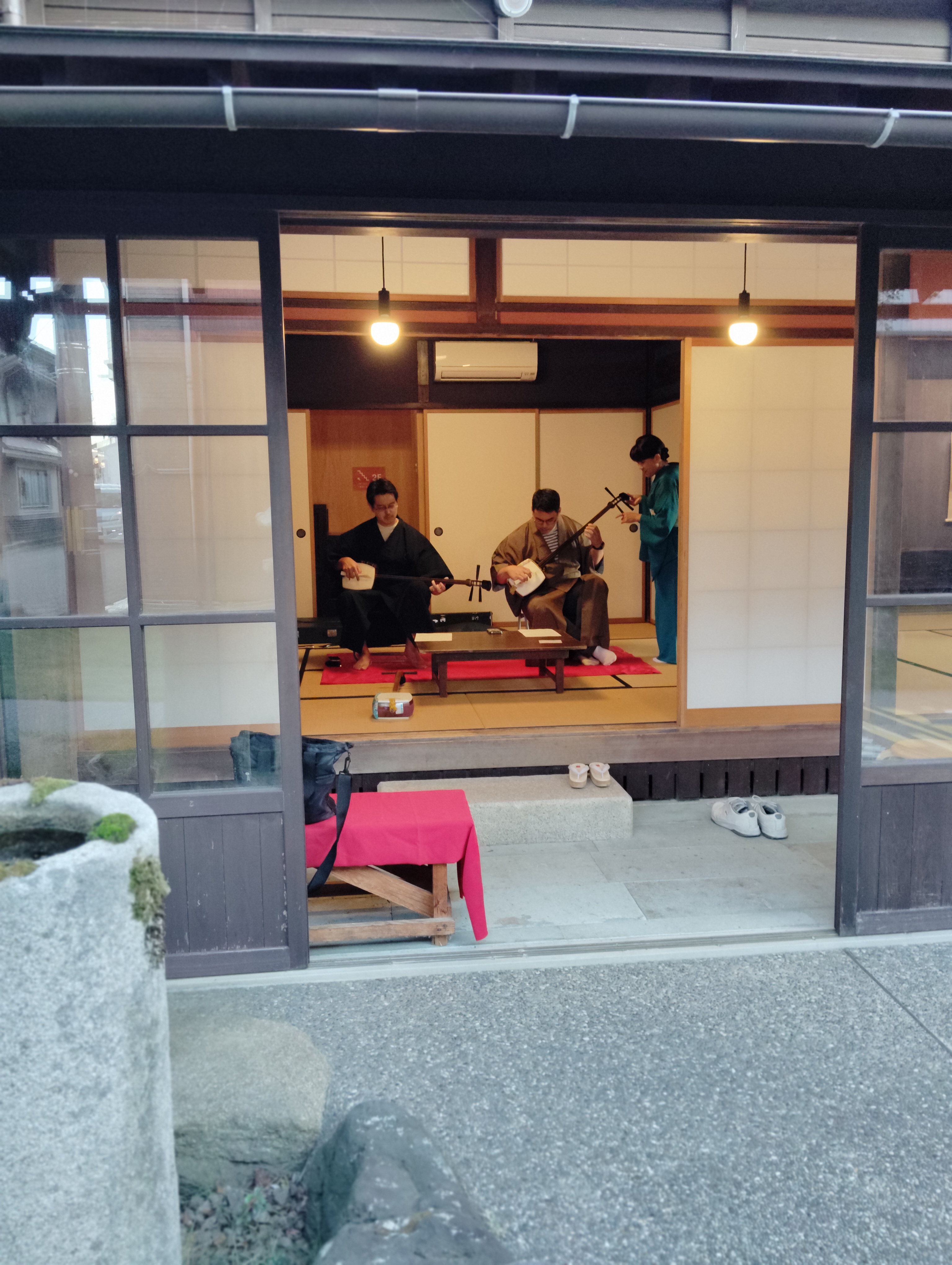
To experience the shamisen in a preserved district lined with streets that still bear stone paving made from local Shakudani stone is to encounter the continuation of that history. When the bachi strikes the strings, the dry, resonant tone reflects softly off the beams of the old townhouses and spreads through the room. The sound disappears in an instant, yet its afterimage remains in the air. Perhaps because it leaves no physical form behind, it feels all the more vivid.
In the workshop, you learn how to hold the instrument and use the bachi while playing simple phrases. At first the notes may sound uneven, but gradually they begin to settle into the feeling of a folk melody, and that moment of recognition brings an unexpected joy. The shamisen is an instrument shaped not only by melody, but by rhythm and ma—the meaningful space between sounds. In that sense of timing lives something of the port town’s own character and human warmth.
For those who want to engage more deeply with Japanese culture, the experience can also be enjoyed while wearing kimono. The weight of the fabric and the change in posture naturally straighten the back and bring a quiet tension to the sound of the shamisen. Stepping outside afterward, the town’s wooden lattice facades and old merchant houses feel less like scenery and more like a living extension of the experience.
Walking through Mikuni Minato in kimono, with the sound of the shamisen still in your body, is not simply sightseeing. It is a way of entering the atmosphere of the town itself. With the sea breeze in the air, it becomes easy to imagine the presence of the sailors who once passed through here.
There is nothing physical to take home—but the memory of the sound remains.
Along the sea routes once connected by the Kitamaebune, the culture of Mikuni Minato continues to resonate quietly today.

Skills Shaped by the Climate of the Sea of Japan
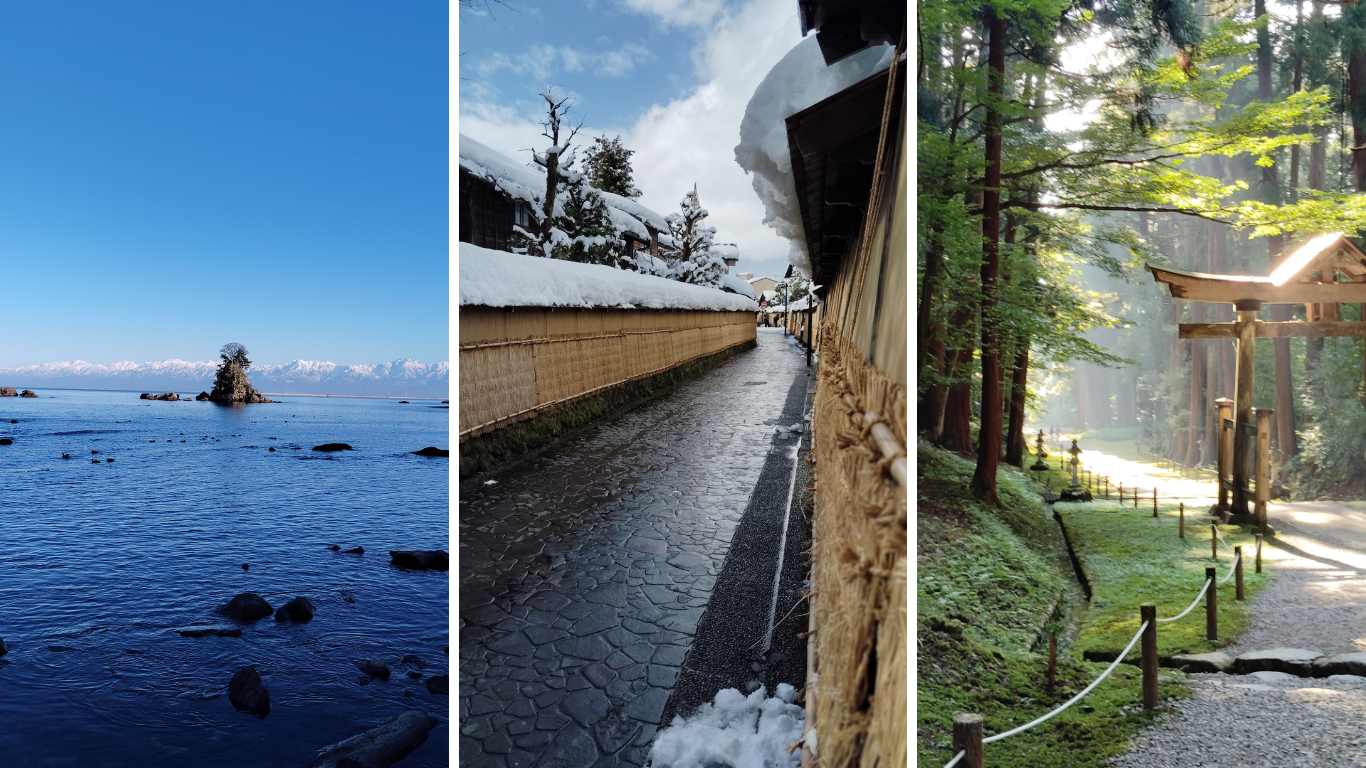
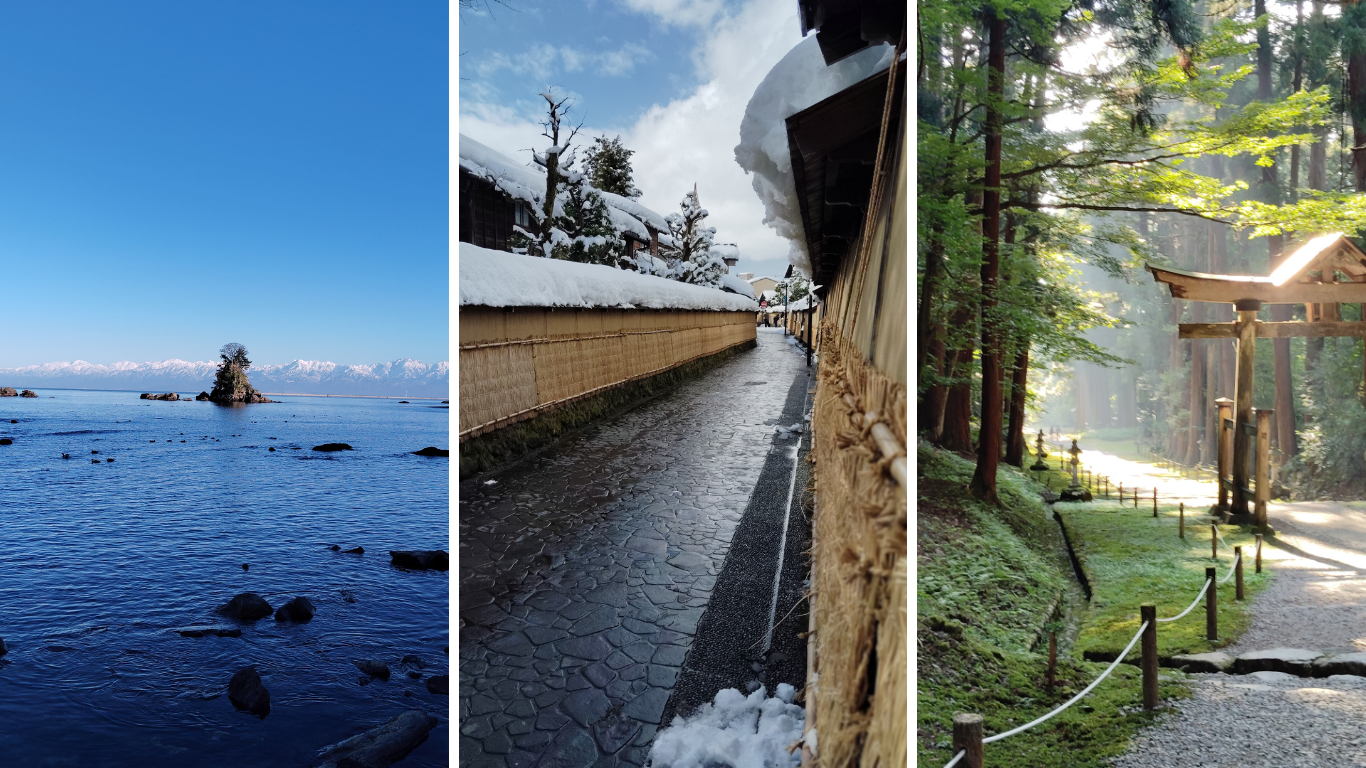
The craftsmanship of Hokuriku is deeply shaped by the climate and landscape of the Sea of Japan side of the country.
Long winters, moisture-filled air, and months enclosed by snow encouraged people to turn their attention not outward, but toward the materials in front of them. In that environment, they learned to work with care, patience, and precision.
The ring of steel being forged, the heat of the flame, the weight of clay, the glow of gold leaf, the resonance of the shamisen—none of these traditions seek to impress through spectacle. Instead, they carry a quiet tension and an honest strength. The crafts of Hokuriku have proven their value not by exaggeration, but by continuing to be used.
What visitors can experience here is not only the finished object, but the process of transformation, the rhythm of the artisan’s hands, and the sensibility shaped by the land itself. A preference for endurance over luxury, and for substance over display, runs through the culture of the region.
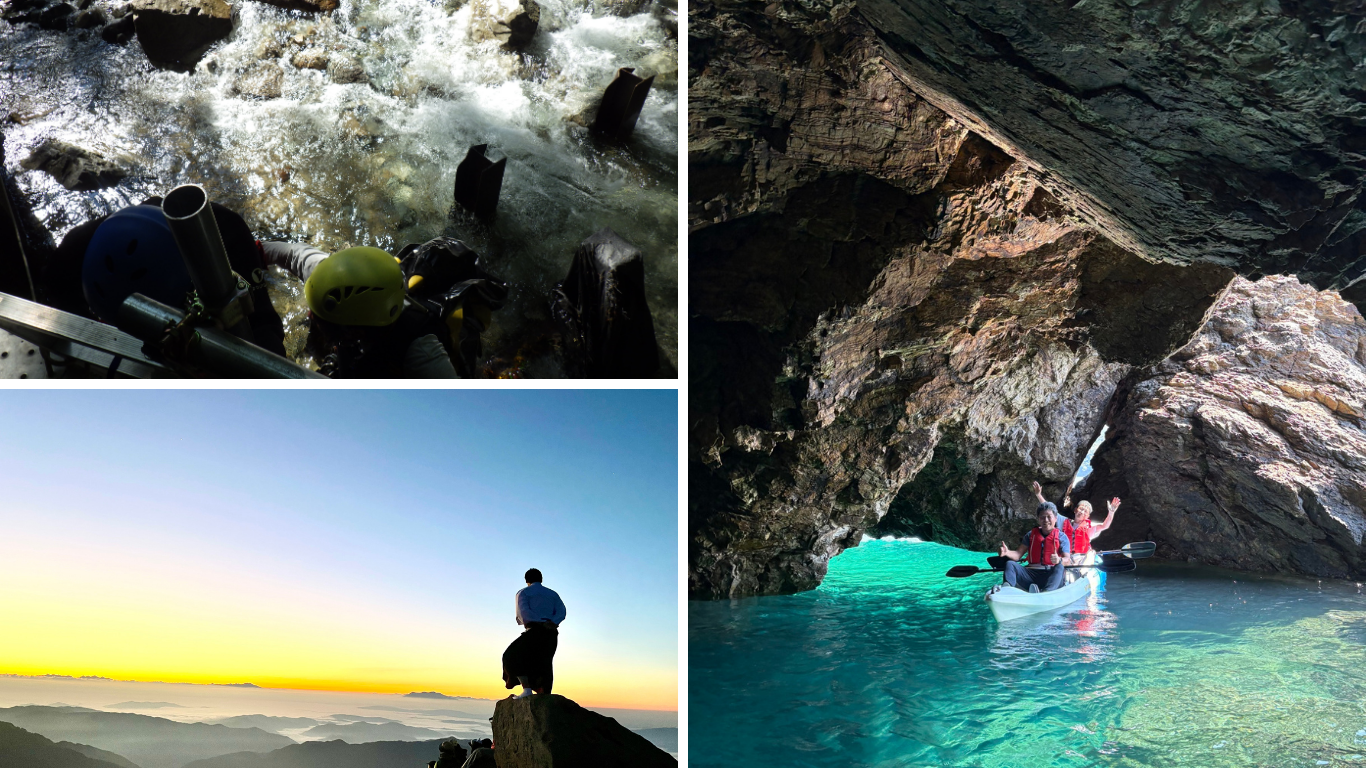
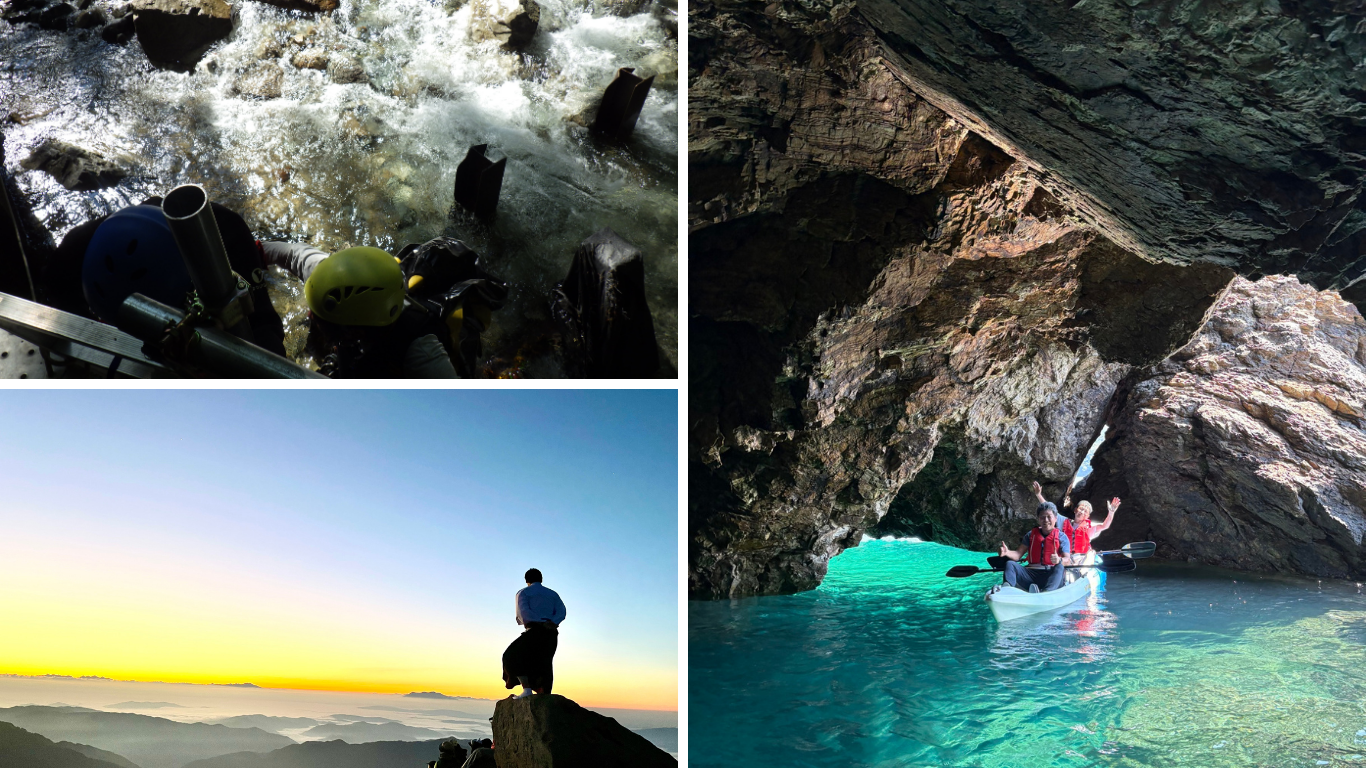
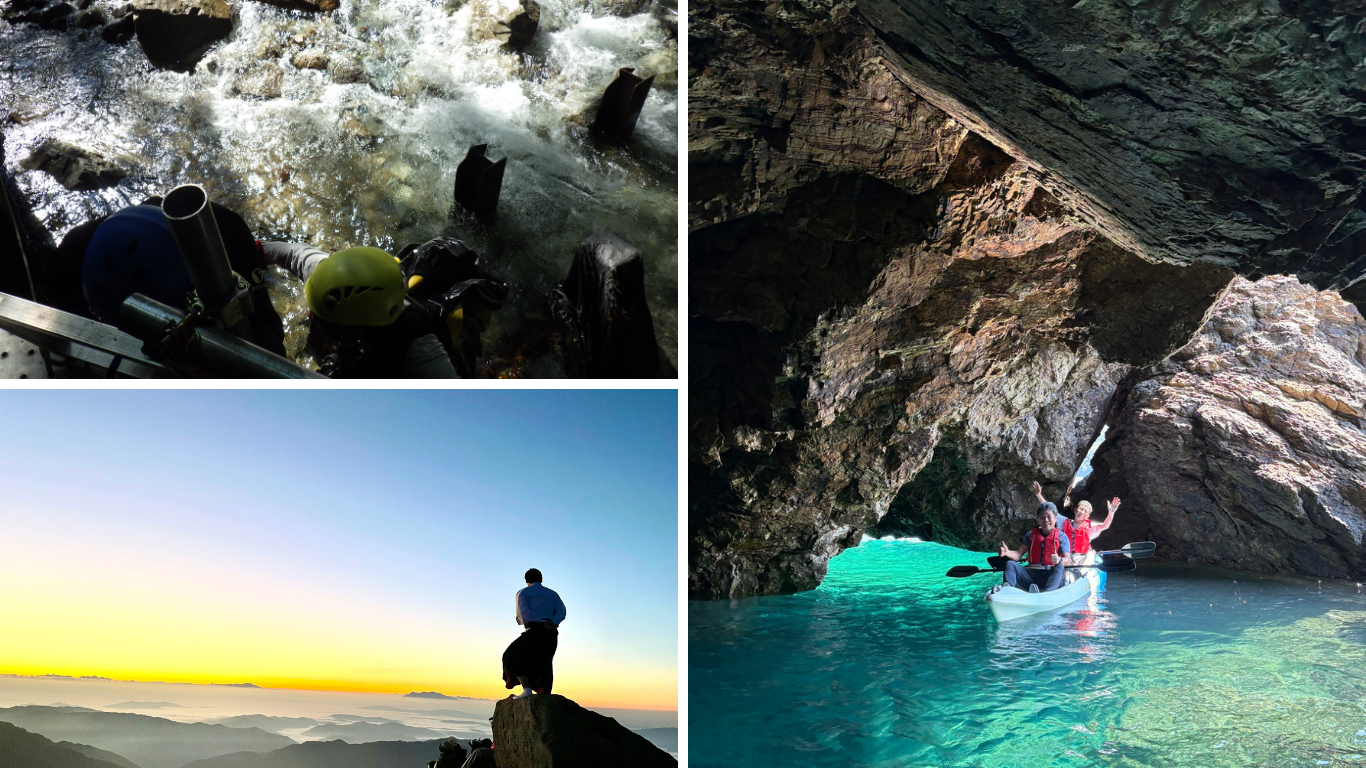
The experiences introduced here are only one part of that world. Across Hokuriku, many more workshops, breweries, and performing arts traditions continue to thrive, each developing in its own way within a landscape framed by sea and mountains.
To travel through Hokuriku is to encounter skills shaped by the climate of the Sea of Japan.
The time spent here leaves behind a tangible sense of values that cannot easily be seen, but can unmistakably be felt.


.png)

.png)
.png)
.png)
.png)
.png)
.png)
.png)
.png)
.png)
.png)
.png)
.png)
.png)
.png)
.png)





.png)
.png)
.png)
.png)
